“The sharper the knife, the cleaner the line of the carving.”
–GarySnyder, Practice of the Wild
Gary Snyder wrote these wordsas a metaphor for the precision and elegance of relationships among members of the natural world, the knife of each species’ adaptations for survival honed on the whetstone of evolution. Given that understanding, he notes, we have a responsibility to live in ways that do as little harm to these relationships as possible, ways that don’t dull the blades. Because as any woodcarver knows, it’s the dull blade you need to watch out for, not the sharp one.
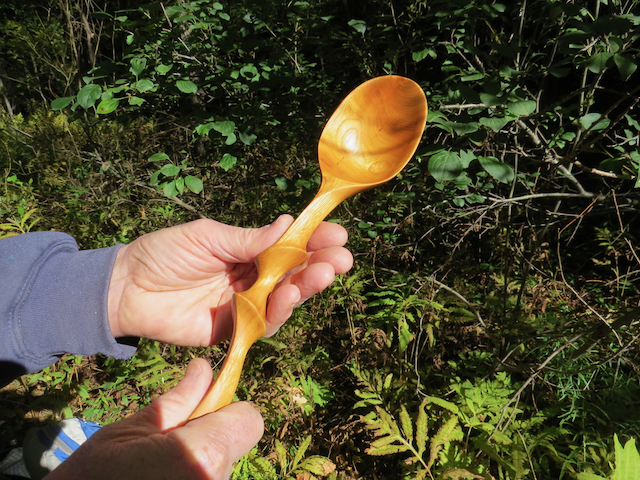
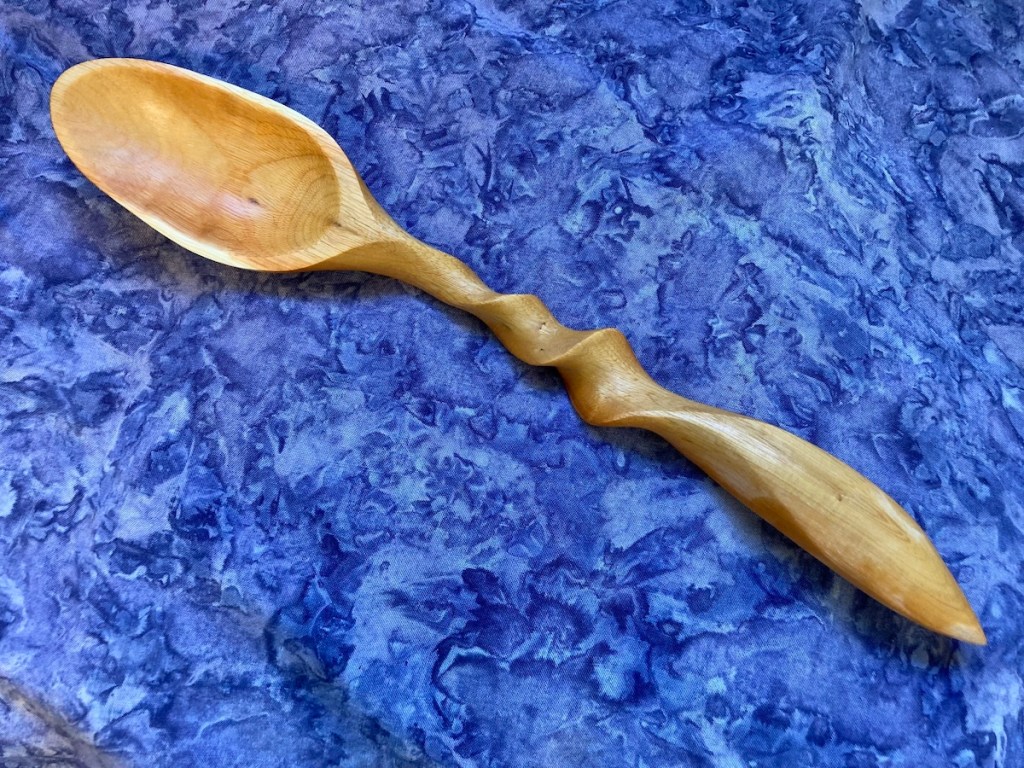
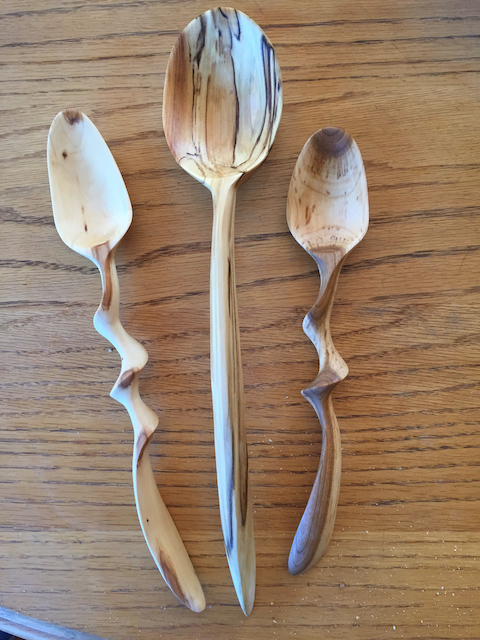
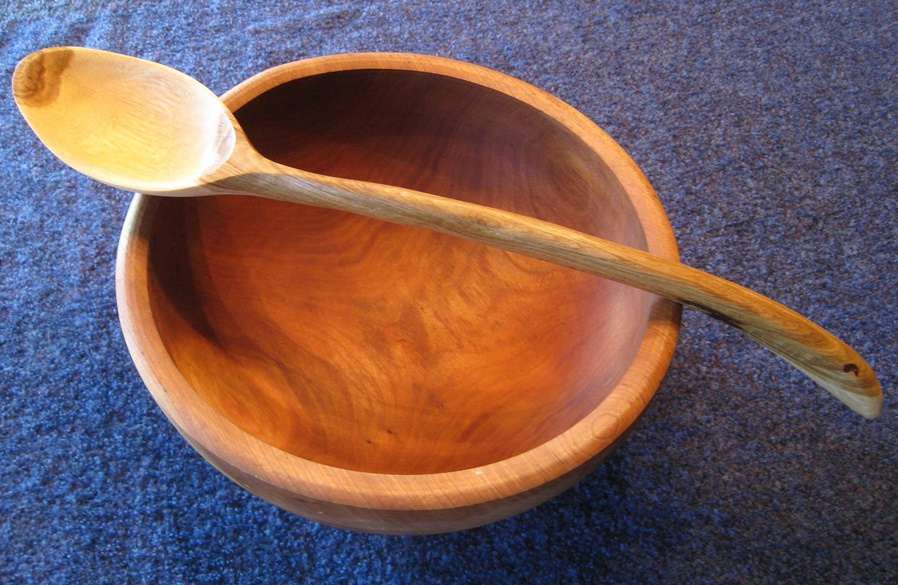
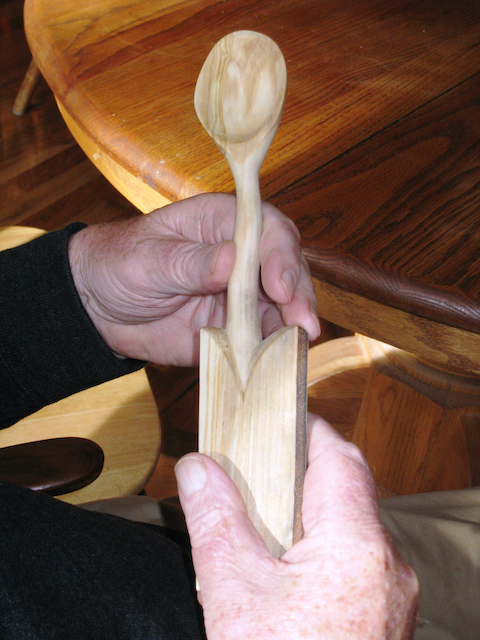
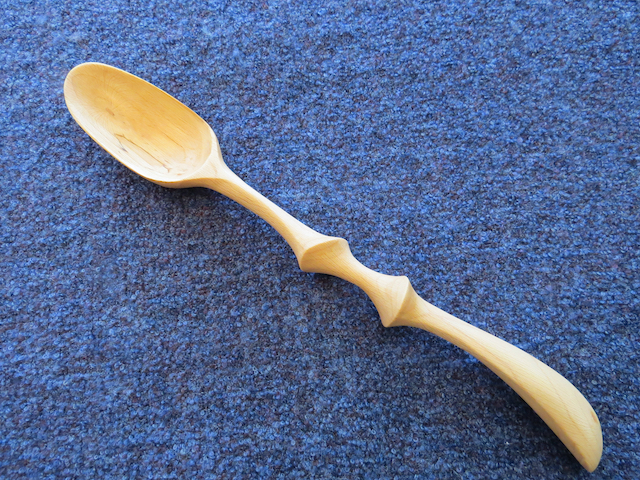
I love carving spoons with hand tools: a coping saw and hatchet to shape the wood, a straight knife, a curved spoon knife, and sandpaper. Since I started carving birds in 2014, I’ve added a beautiful set of palm carving tools. Here are a few examples of the spoons I’ve carved…
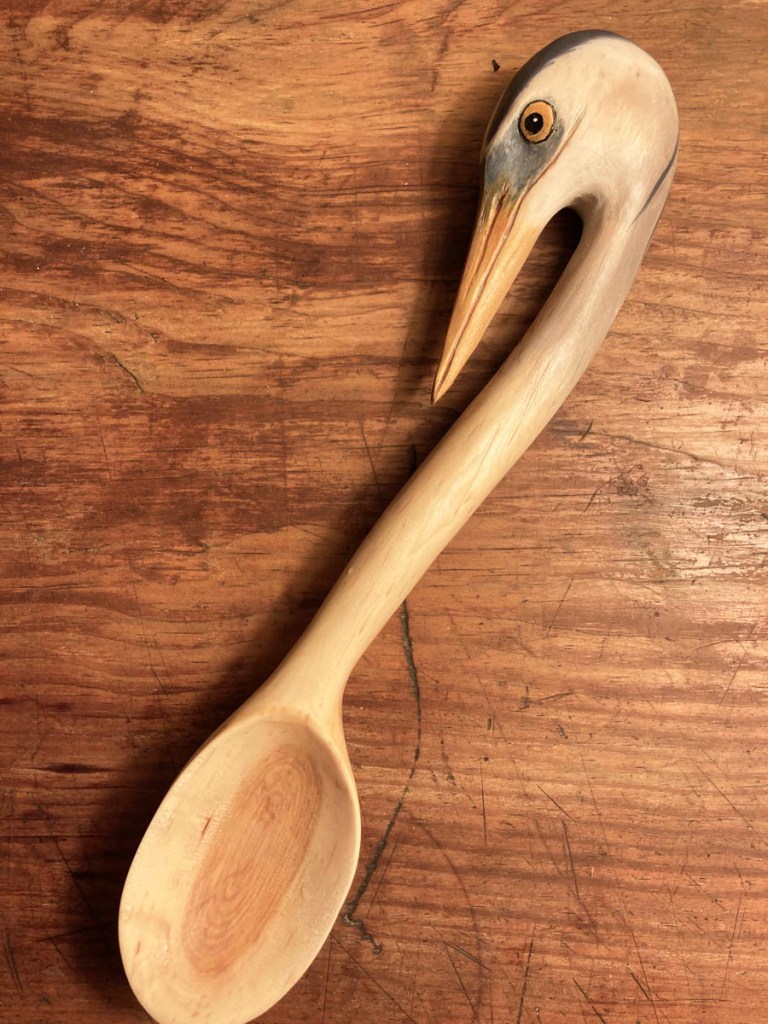
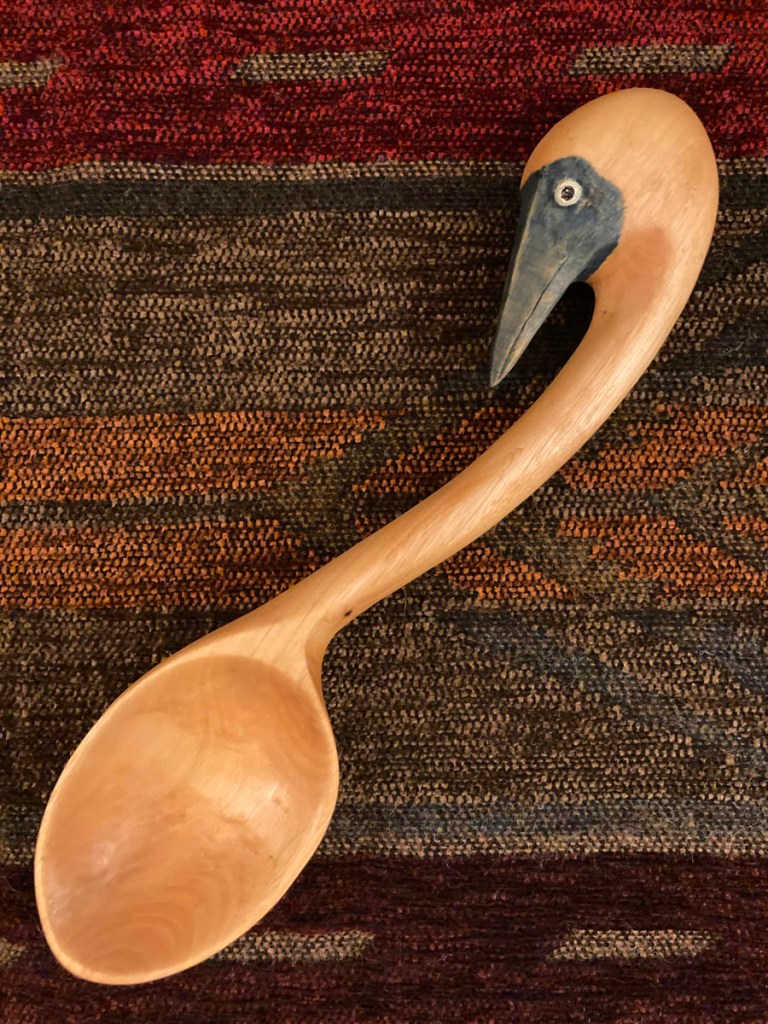
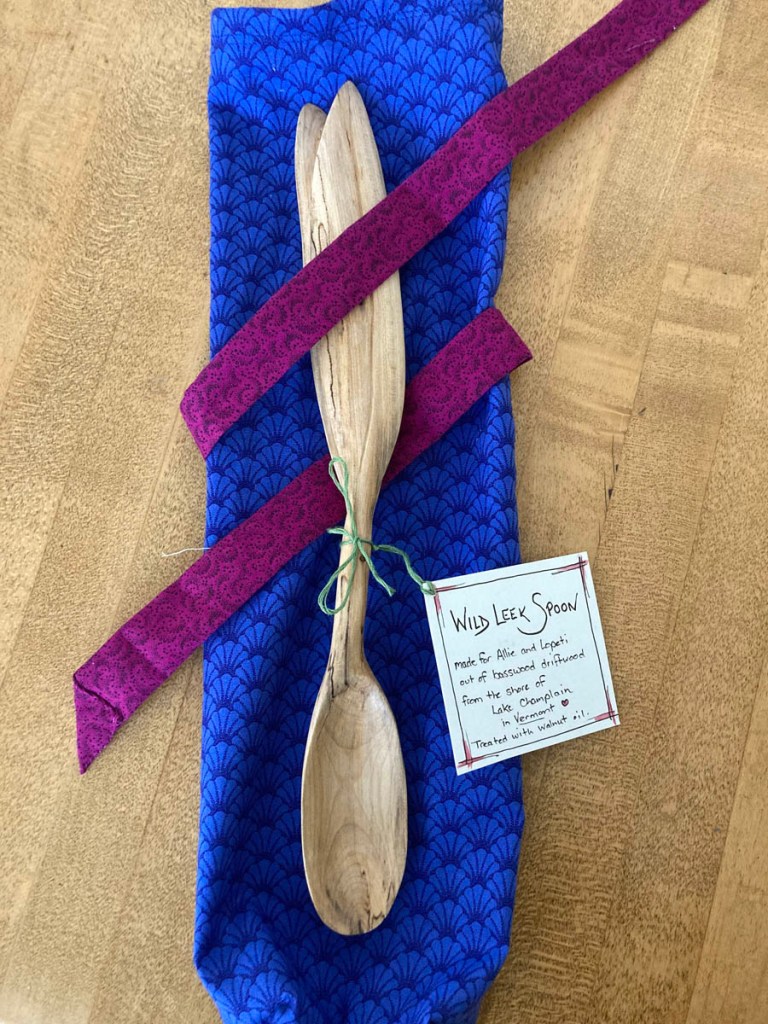
Great blue heron spoon, front. I experimented with intrinsic stains to create the bird’s colors. My new favorite thing–carving bird spoons. There are over 11,000 bird species in the world, and I’ve carved three so far. Better get to work!This blue-footed booby spoon started the bird-spoon series. Like most good projects, it was inspired by gratitude–to my brother and sister-in-law, who took me to the Galapagos with them. I didn’t have any special carving tools at that time for making the head, so its detailing is quite simple.Inspired by the beautiful shape of wild leeks, I carved this spoon as a wedding gift, using driftwood (perhaps basswood). I especially liked the freckle of dark wood in the handle of this spoon.Buckthorn is considered an invasive exotic here in Vermont, but it’s my favorite spoon wood–look at that warm color!Another buckthorn spoon, made for a wonderful ecologist retiring from a long career with the state of Vermont.Some interesting colors in this aspen.Gambel oak spoon (one of the “Sibling Spoons”). Like every other one I’ve made, I gave it to some friend or family member.I wanted to give my dad a spoon, but he wanted a talking stick, so we compromised, and I made a talking stick that is a spoon emerging from a block of aspen. The bark is still on the wood at the base. Many hands have held that spoon, since my dad used it for years in the workshops he led.
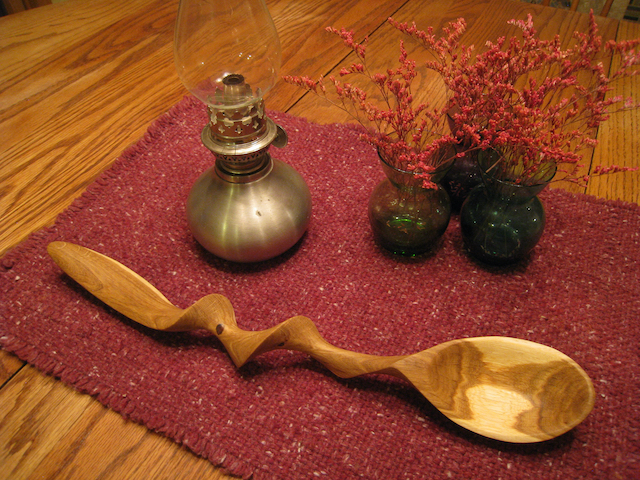
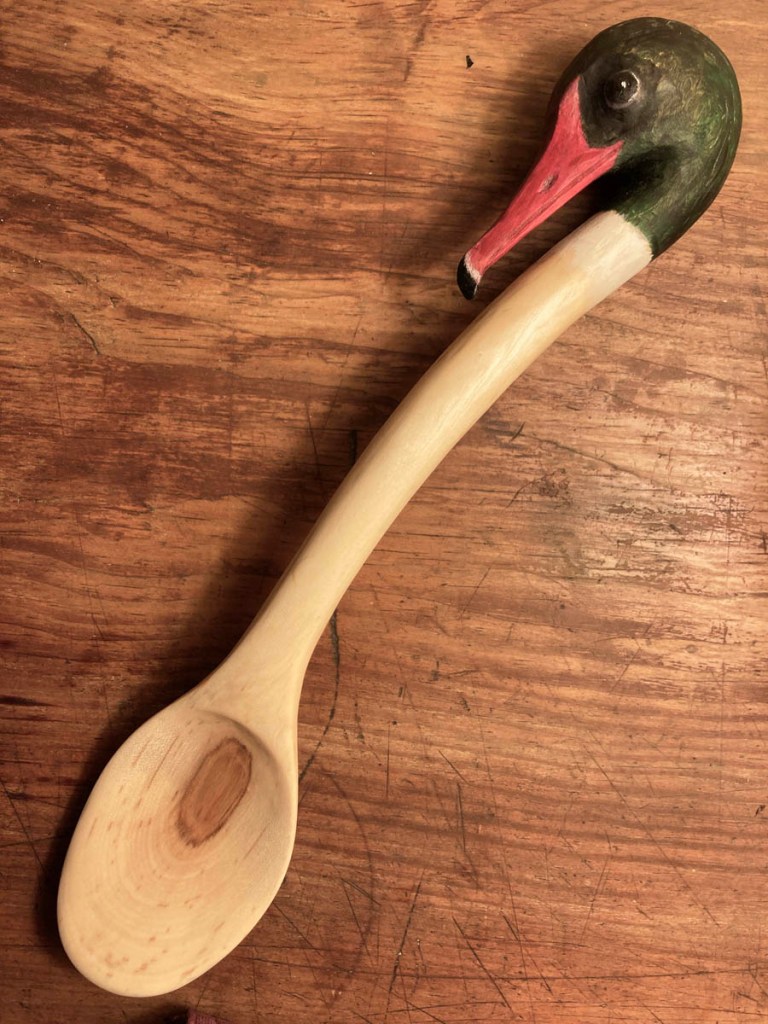
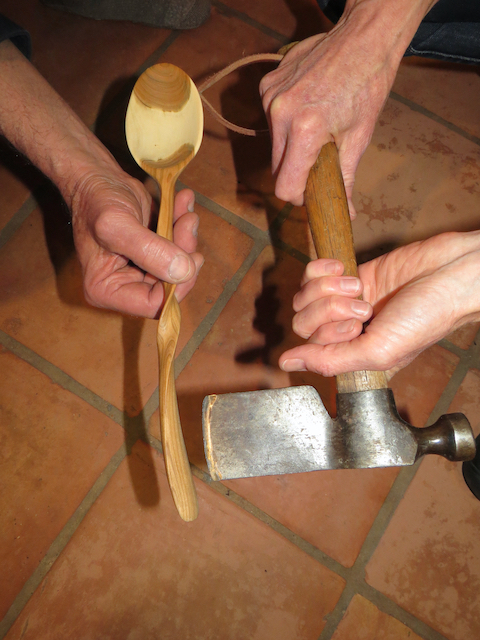
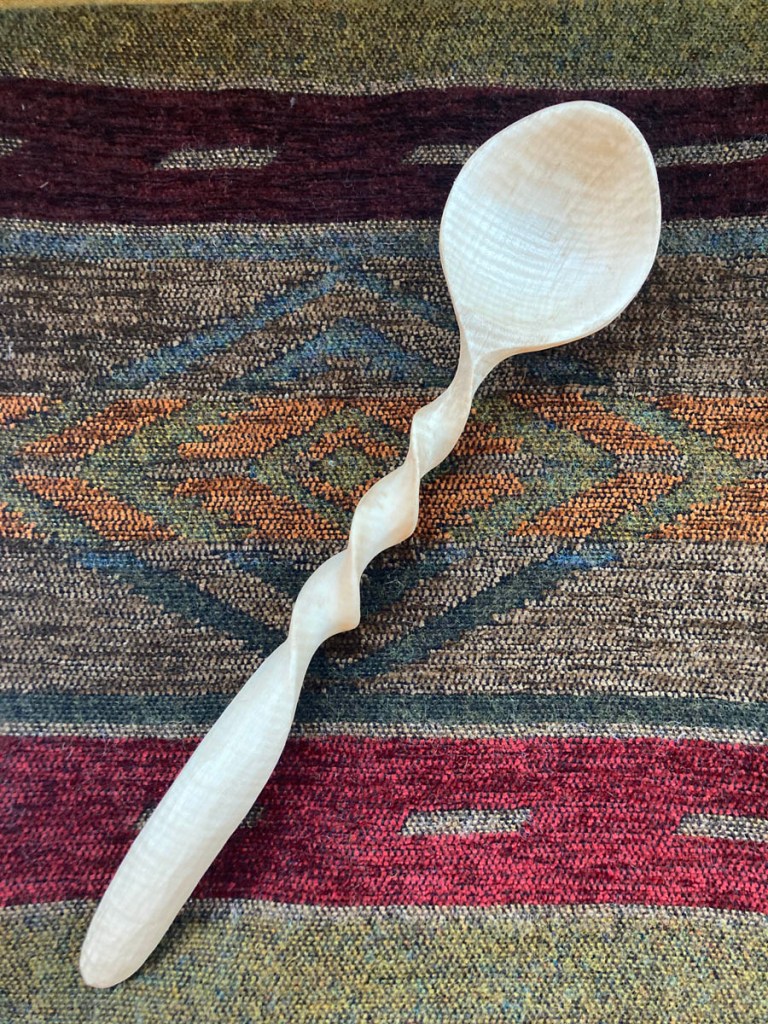
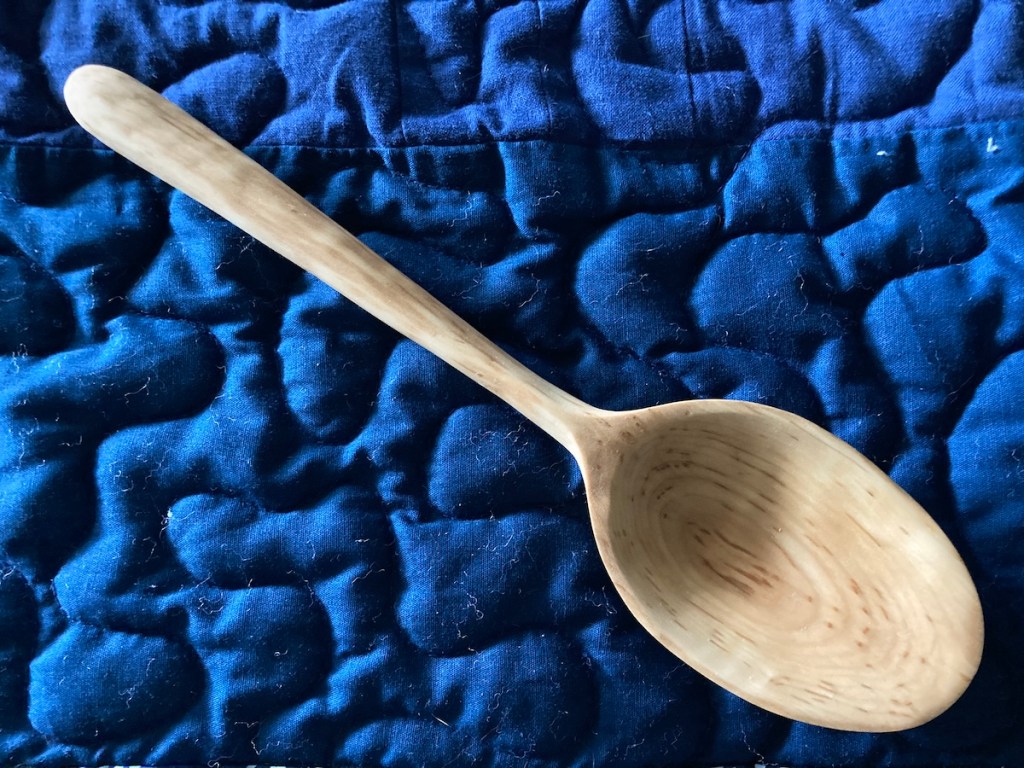
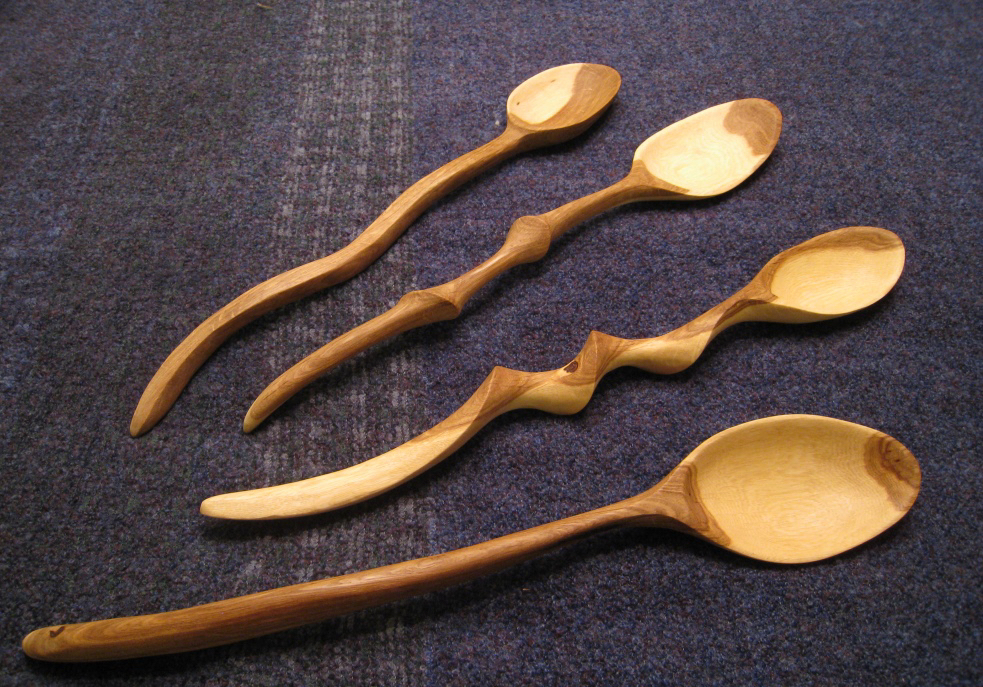
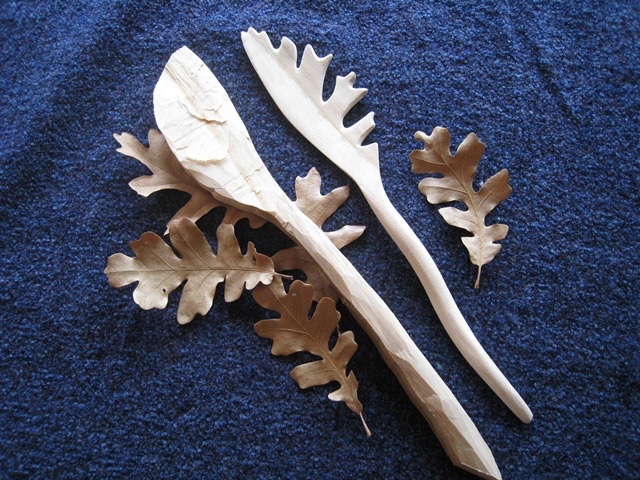
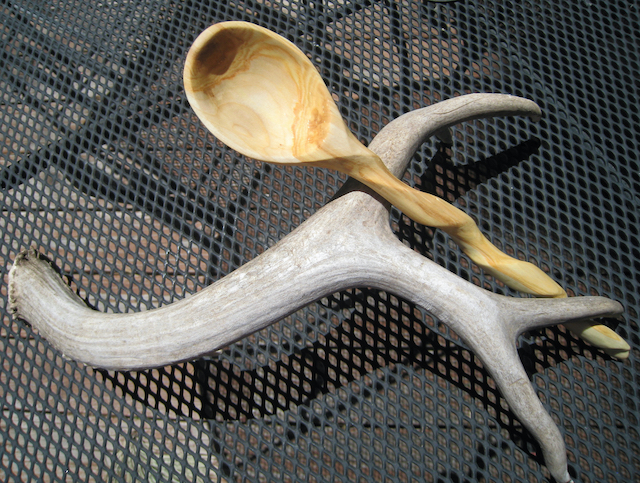
Common merganser. The process of painting the head brought so much more awareness of the bird’s form. I had never noticed the black tip to the bill, or the touch of white just behind that black.My sister Paula and her wife Deb had an immense white ash in their front yard that the town cut down to widen the road. Paula saved me a piece of the wood, and I carved a spoon for them. I traded with a friend of mine–my spoon for his beautiful shingle hatchet.More buckthorn–such luminous grain.While chopping firewood, the patterns on this chunk of red maple caught my friend’s eye. The zoomy patterning is called “tiger maple.”The simple form works well for this wide- and shallow-bowled spoon.I called these the Sibling Spoons. Four spoons, all carved out of the same round of Gambel Oak, cut from a fallen branch I found in the forest. They share the same heartwood, like my four beloved siblings.Half-finished set of salad tongs made of aspen, inspired by the beautiful shapes of Gambel oak leaves.My first attempt at the spiral form, in aspen, way back when. I was quickly hooked by spirals!My very first spoon, of black birch. It was a bear to carve, since I only had a Swiss army knife at that time and the wood was really hard. Despite the long hours, I was smitten.

 Alexandra Murphy Communications